Days of Celebration and Gratitude

Graphic rendered by CoPilot AI

Now, that may read like a pompous title for a post, but let me relate the context here…..

Throughout the calendar year, everyone has days of particular memory, good or bad, that float up for annual pondering. I’m no different. In my life today, and for many years past, I live a block of days that each have their significance, together and apart.

In my life they have landed in this order (further explanation a little later…):

  • Bachelor Party Day
  • Wedding Anniversary
  • My Birthday
  • Veterans’ Day

These, celebrated every year, always lead me to focus on my past, present, and potential. While each has a much more involved story, here are some fore-shortened versions:

  • Bachelor Party Day – The day before my wife and I got married, we were both so amped up that we went ahead and put on our rings, and went to a hole-in-the-wall Greek restaurant for supper, then went wandering around a mall. We were so giddy about the next day that we just had to get out and burn off some emotional energy together. It was fun, and a day we both remember. The anticipation was glowing!
  • Wedding Anniversary – Many of you have had this kind of commemoration in your lives, and, if not, you know what it is. Like anyone who has lived this experience, there are a lot of big and little things I remember. Each of them is like a small light, which, when put together with all of the other small lights of that day, make the total memory (which, as I’ve gotten older, has further solidified some, mythologized some others, and allowed some others to fade a bit…). My life since that day has not been the same, and is lived in light. Some light has been harder to see at some times over the years than some other light, but it was still there.
  • My Birthday – If you’re reading this, you have one of these…someplace. Some birthdays are memorable, some pass by almost unnoticed. Some are, or feel like, milestones (I have just had my 70th and THAT feels like a milestone to me…..). I’m fortunate enough to have my immediate family living here, and several close friends, along with the stream of friends I keep in touch with, one way or another, across the ether and locally. They are all wonderful people and I am so very grateful for them. Their ongoing friendship, kinship, and intelligence makes our touching base on this day in some way more meaningful.
  • Veterans’ Day – The inclusion of this day can seem odd to some, except that I spent a large portion of my life in the U.S. Navy Music Program and the National Guard (the latter while I was in college for 5 years….). Being in a Navy Band meant that I ALWAYS had a gig to perform on Veterans’ Day, and, early in my career, enabled me to meet several women and men who were beyond any appreciation I alone could give. At one ceremony in Chicago, I got to meet a World War 1 vet. At Pearl Harbor, I got to meet a number of veteran survivors of that attack (as an aside, my father-in-law was a Pearl Harbor survivor, and my brother-in-law was a Vietnam War vet who suffered from Agent Orange exposure; my Dad was a Korean War vet, my brother was an Iraq War vet, I have several cousins who served in Afghanistan, and other uncles who served in World War 2….lots of love in our family for Vets….). I am humbled to be a member of this huge community, and I feel gratitude every day for all that’s been done, all that’s being done, and the integrity of you all.

I get to celebrate and dwell on memory through this block of days at this time every year.

I don’t know, obviously, what each of your experiences are and what kinds of memory-encased days you may carry with you. I just want to express the particular frame I encounter every year at this time. Remembrance can truly help focus perspective. Each time this block of days comes up, there are always interesting things going on in my life, community, and world. Celebrate and be grateful…a pretty decent way to approach them for me, and I hope for you too.
See It All

I do a lot of varied reading through out the days and weeks. I just finished a book by Dr. Cornel West entitled “The American Evasion of Philosophy” and started one by Slavoj Zizek entitled “The Sublime Object of Ideology”.

Not exactly easy reads, but they are part of my ongoing desire to wrap my head around the philosophical, cultural, societal, spiritual, etc. foundations that not only surround us today, but brought us here (Lest you think I’m buried in this stuff, I’m also reading/listening to other books – War & Peace, Limit by Frank Schätzing, a History of Spain, Theology of the Old Testament by Walter Brueggemann, The Fabric of the Cosmos by Brian Greene, and a couple of others…..I like being able to switch gears as well as get exposed to the unpredictable ways all of these can shine different lights on each other).

As I read the early part of the book by Zizek, he mentioned a “progressive theorist of education” from the Sixties who published a study in which a group of children were asked to draw an image of themselves playing at home. A few years later, after some years in primary school, the same group of youngsters were asked to do it again. There was quite a difference. The early self-portraits were “exuberant, lively, full of colours, surrealistically playful…” The later portraits were much more subdued. Most of the group chose to use only regular pencils, although other colours and drawing pieces were available. Predictably, this experiment was taken “as proof of the ‘oppressiveness’ of the school apparatus, of how the drill and discipline of school squash children’s spontaneous creativity, and so on and so forth.” (Slavoj Zizek, The Sublime Object of Ideology, pg. ix)

While not entirely subscribing to this viewpoint, I began to think about the experience and perception of each of us, surrounding expectations regarding what we see, and a whole host of other influences, factors and limitations. I remember clearly, to my later shame, working with my kindergarten-age daughter to try and help her learn to color within the lines of work that she had from school. My goal was to try and help her be successful at school, without thinking about the joy of coloring outside the lines. She worked very hard to do this, which slowed her down considerably, thereby finding a different avenue from which to annoy her teacher (she later was told, in class, to just stop working at it so they could move onto the next thing on the classroom schedule…..She felt like such a failure…).

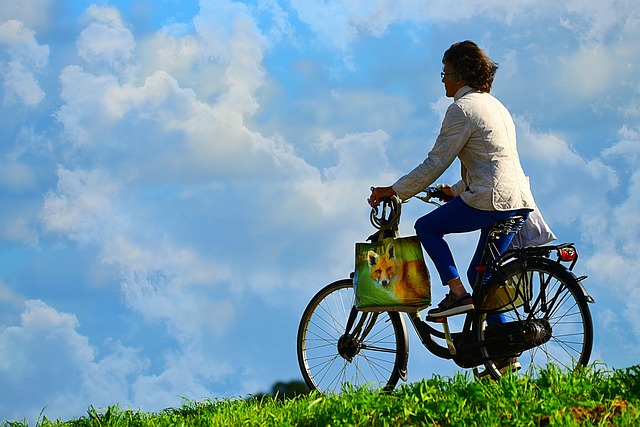
Visualize this process. Take this photo:

Graphic 1: Source unknown

A younger child, asked to draw this, gives you something like this:

Graphic 2: rendered by CoPilot

A few years later, upon being led into the world of “how a grown-up would do it”, the artist hands you this:

Graphic 2: rendered by CoPilot

From the vantage point of someone about to turn 70, I meditated on this conclusion by the educational theorist, my experience as a parent and member of our society and culture and years of life folding like layers upon my awareness. If the photo, as regards this writing, represents what I ACTUALLY see, then the two drawings are not an either/or perception……they are both/and and beyond.

The first drawing has, perhaps, more vibrancy and colorful impressions of the reality. The second, however, isn’t ‘wrong’. It observes a more Platonic ‘essence’ of the subject, with clarity and precision that the first one misses (although, to be fair, ability and the difficulty of working crayons when in youngster “Woo-Hoo!” mode can make clarity, etc. harder to capture….).

So, there’s more there. It is NOT a matter of one being Right and other being Wrong. Not only are they both Right, but there’s even more there to see. Throughout your day, sit with the moment and try to restrain your own ‘monkey mind’ concerning the things you see. Just take the grace and time to see them, accept them, and realize that others may see different things about them than you do, which isn’t wrong. Taken together, you may both be “right” with more to see together.

I’m feeling that I want to see what I see more in light of the first drawing. The colour, the life, the vibrancy lead me to a mindfulness I don’t access any other way.

The Whole Deal

Graphic by CoPilot AI

We human beings fall so very naturally into “either/or” thinking. Whatever I happen to be thinking about or experiencing, there always seems to be an “over-and-against” object to face or confront and either ignore, fight against, abhor, or try to change. This is true within as well as externally.

A LOT that I have read over the last number of years by any number of authors and resources discusses this problem and how to address it. Internally it can show up as a distaste (at least…) and sometimes hatred (many times…) of some aspect of who I am or things I have done, some of which I still do. Externally it shows up many, many ways and in differing degrees. Anywhere from a slight disgust or aversion to something or someone, to raging, blind hate and anger. However the so-called “Other” shows up in my experience or cognitive observation and classification (another thing humans excel at: classifying things and people to ensure we don’t have to work too hard at understanding them…..we HATE cognitive heavy-lifting, by and large). Those things inside me I work to change, lose, ignore or suppress.

Understanding myself as a whole person, encapsulating both light and shadow, is hard (and all of the degrees of grey…). It’s one of the main reasons why I have begun to appreciate the Taoist Yin-Yang symbol as a representation of the whole me. Another set of phrases, especially strong in my understanding of this truth, is settled in my memory by Richard Rohr. A quote of his that I have taped to my desk says, “The false self is not a bad self, it’s just not the true self.” The light and dark are both part of me, and I am totally loved, regardless. That, of course isn’t to say that I don’t endeavor to work for the enhancement and health of the light in myself, to the diminution of the shadow. But, I’m not working to cultivate the shadow, either.

A Journey of Gaps

Graphic by CoPilot AI

I keep reading, especially in the book I’m into about Sartre and his thought journey right now, of the unusual place of art in establishing a counter voice in times of upheaval and uncertain restraints. It’s hard for me, as I feel like I only have one or two drums to beat, and that I’ve whomped on them before, so what’s new there? I’m not sure….Perhaps the context of a new day or a different focus?

That said, I have friends who take part in various arts (music, visual, written) in regular and copious expression. I’m a bit envious of their compulsion/addiction to their artistry. But I know that I can’t compare myself to them. I can look at who I was yesterday and look at myself today. Moving this moment forward is the only change I get to really take part in, and life teaches me that THAT changeableness is the norm of Reality. Without being driven over by events, flexibility and openness to the call in that moment and the next is what I can pay attention to and live into and out of.

My real passion for the past 4 or so years has been to read and learn as much as I can. My personal library is enormous, and I’m guilty of only reading about 30+% of the books I purchased in my life (years ago I used to comb through book stores while I worked in the military or in corporate, telling myself that I was obtaining them for when I didn’t have the funds to buy them any more. Of course, being a true bibliophile, I always came up with fund for more books).

Then there’s the desire to reread those few works that call to me to be experienced again, for whatever reason. There may only be so much time between today and the day I will be unable to read or understand what I can take in, so I do my best to cover a lot of ground now. As the eyes give out, that is a challenge, although I am mightily grateful for audio books…..I only wish they also had more of the other books I have that haven’t been produced in audio yet, but it’s a good start.

Anyway, as I have studied more in the (somewhat overlapping) areas of linguistic theory, critical literature theory, theology and mysticism in a number of religions, cognitive science, psychology and communication, the histories of other cultures (and their global influence), and the kind of Zen-like qualities of quantum mechanics (I’m a science geek, but I don’t have the math and physics chops to go very deep there, still….it’s awfully cool!)…my initial question to myself when I started this particular journey was, and still is, “What brings us to this place in society today, and what can I better grasp in order be an intelligent and love/life-giving person in this world?”

That’s an inadequately expressed, shortened goal. There are any number of rabbit trails to head down in working toward filling in the gaps in my understanding, usually uncovering scores of new gaps as I go. I’ll pass on some of the stuff I find out about, if it seems like it might interest you as much as it does me.

The Line

I pretty much get the moves that the ELCA (Evangelical Lutheran Church of America) makes to recognize the marginalized and the discriminated-against in our community and culture. Author and Shaman Lenny Duncan made that really clear in his Dear Church book, and certainly in his posted experiences in the past several years.


So when it was announced from the pulpit this past Sunday that our church was going to eliminate and/or limit the use of the words “Lord” and “Master” from service as they are reportedly offensive to (especially) Black members of our community, it jumped out at me. They (the words) hearken back to the deferential words and attitudes that slaves had to display to their owners. I can really see the tie-in.


But this bugged me for some reason. The study I have done on language and the history of certain words used a lot in the Bible presents me with a bit of a dilemma. As I understand the etymology of the word Lord, the Hebrew Bible uses this word in place of the Name of God, as it was not allowed to pronounce it (or even to write it, depending on how strict you wanted to be in the interpretation). A number of Christian writers, thinkers, theologians and teachers have chosen to use Lord instead of the Name of God in respect for the Hebrew traditions and their Jewish colleagues beliefs.

This is where the cultural context of language gets sticky. In the process of abstracting or obfuscating the word Lord from community liturgical use, what might this signal to our Jewish community, especially given the rise in anti-Semitic language and attitudes throughout the West of late? There is also another cultural challenge: Lord is a key word, and more importantly concept, for many Christians in their own spiritual lives. While the abstraction and excising of the Lord from the liturgy may address the discomfort of a segment of the community and acknowledge a past that is despicable, it denies the depth of integration of a particular, somewhat different meaning of the word into the devotional lives of others.


Where is the line? At what point is love, understanding and compassion flowing both directions? And there are So Many discriminated groups within our culture…..in a discussion I had about these questions, it was pointed out to me that, among many others, women are a discriminated class. Despite much having been done over the past number of years in opening up ministry, authority, and inclusive language, is it “enough”? What does “enough” even mean? Positive steps have and are being taken, but is our culture putting those efforts on pause, slowing them down, backing up, or what?

Other groups of community members with “invisible disabilities”, such as neuro-divergent people or those suffering from chronic pain, present different and difficult challenges to the caring people around them. How are the church and community seeing, prioritizing or addressing them in the context of the liturgy, their spiritual lives and day-to-day well-being?


Where is the line? That’s a really good question. Should there be a line? Ideally, no. Inclusiveness, by definition, means including everyone. Partitioning people into different groups, while helpful in ministering to needs, contains the danger of walling people from each other, and unconsciously prioritizing one group over against another. This is not the way that Jesus ministered, that I can read. He said that he came first to the flock of Israel, and then would turn around and heal and/or minister to Gentiles. For example, the demoniac of Gerasene was quite obviously in the Gentile world (why else would there be keepers of an enormous herd of pigs right there?!). Yet He cast the Legion of demons from this guy and sent him to witness to what God had done for him. No apparent line in His ministry that I can see there.


What can this mean for our actions within today’s world? I don’t think I can give any kind of definitive answer, other than to draw attention to The Line and encourage us to consider its meaning both in a liturgical and day-to-day apprehension.


The Line is there. Do we do anything with it?

Witness As Being

Image by Alex Carabi

While staying with them, he ordered them not to leave Jerusalem, but to wait there for the promise of the Father. “This,” he said, “is what you have heard from me; for John baptized with water, but you will be baptized with the Holy Spirit not many days from now.”

So when they had come together, they asked him, “Lord, is this the time when you will restore the kingdom to Israel?” He replied, “It is not for you to know the times or periods that the Father has set by his own authority. But you will receive power when the Holy Spirit has come upon you; and you will be my witnesses in Jerusalem, in all Judea and Samaria, and to the ends of the earth.” When he had said this, as they were watching, he was lifted up, and a cloud took him out of their sight. – Acts 1: 4-9 NRSV

When I carry forward what I wrote about earlier on what “witness” means in various contexts into this text, something jumps out at me: the phrase that I used to hear when I was much younger, “Let’s go out witnessing!” seems misplaced…

Being a witness isn’t an activity I set out to do or accomplish. I am a witness by virtue of experiencing God’s Spirit and power in my life. Jesus didn’t say “y’all go out witnessing to the world!” He said, “But you will receive power when the Holy Spirit has come upon you; and you will be my witnesses in Jerusalem, in all Judea and Samaria, and to the ends of the earth.” (emphasis is mine)

The text above mentions receiving power in the Holy Spirit twice before then telling the disciples that they will be witnesses. Certainly this doesn’t mean that NOW God will start to work in their lives, NOW God will start to demonstrate His power……God’s been working in their lives for quite awhile! The Holy Spirit living in Love and Power through and from them into the world around them heightens their awareness of what they have experienced. The Spirit gives them the loving insight into what that might mean to those around them, and the wisdom to recognize the dire need for God’s Grace in each and every one about them. They each learn how to express their experience, both in love and in restorative justice, that allows their witness to show, not themselves, but our loving and graceful God to that person.

Being a witness isn’t something we train up to do. We are witnesses. There are things we can learn from our community, from spiritual friends and others that can lead us to be more sensitive to the Holy Spirit’s work, and perhaps, more wisdom about being the witness that God has placed us in this life to be, right now, with this person……but the central experience is your experience with God in your life.

Prayerfully consider your rich relationship with God, and present that as an open book through which the Spirit breathes grace for others.

Being: Salt

“You are the salt of the earth; but if salt has lost its taste, how can its saltiness be restored? It is no longer good for anything, but is thrown out and trampled under foot.” – Matthew 5: 13 (NRSV)

For quite some time now I have been fascinated with incorporating “being” in my life and awareness. This hasn’t been easy, nor is it ever “done.” (I know I’m using quotation marks a lot here, but bear with me…)

A term and concept that has gained a lot of attention is mindfulness. This is an aspect of being that I include in my dialogues, but my growing understanding and experience of being (I’m dropping the quotation marks for that word at this point…) is only part of it.

Mindfulness, to me, is being fully aware of the moment in which I reside, at any given moment. It implies a certain kind of attention that is neither cast backward nor forward. One way of looking at how I apprehend being at this time is kind of mindfulness without the attention. Let me explain further….

Continue reading