Best

Graphic by CoPilot AI – Living My Best

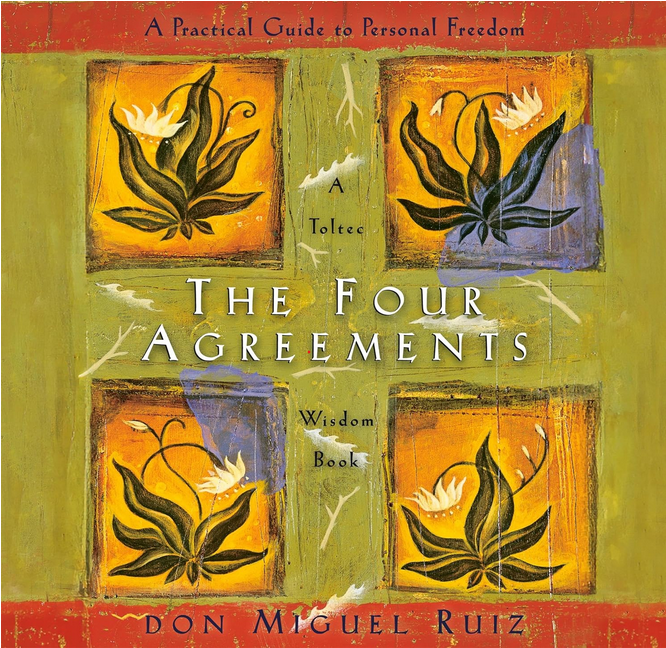
I wrote earlier about having read the book The Four Agreements by Don Miguel Ruiz and outlining the Four Agreements at the heart of that book:

  1. Be impeccable with your word.
  2. Don’t take anything personally.
  3. Don’t make assumptions.
  4. Always do your best.

I want to write about each of these, and have decided to go backwards through this list. So, I will start with the Agreement “Always do your best.”.

I am concerned about clear communication, context, and meaning. That concern makes this Agreement challenging. Here are a couple of the challenges:

  1. Consensus on the meaning of certain words like “best” and “always“.
  2. The overall effect of this Agreement on mindfulness and sense of self.

First, the meaning of words. I have written on this blog a lot about the difficulty of agreeing on the shared meaning of a word. Sometimes, in the context of a conversation, you can use a generic definition of, say, “car”, if that vagueness will work in the context of the conversation. However, if the kind of car and the context of its ownership, condition, etc. is what is driving the conversation, then you need to spend more time mutually defining the car. There is, of course, a big difference between a top-end 2026 Ferrari and an old, rusted-out, barely-functional 1961 Dodge Dart, so you need to agree on what the car is.

So, in the context of this Agreement, what does “best” mean? Well, what ISN’T it? It is not a line or standard set by someone else. There may be goals or metrics that you’re presented with towards which you or your team aspire, but they do not define your best. “Best” is a movable beast. You are an organic being, and there are a huge number of factors and conditions that moderate what is your “best” in every moment. Only you can know what your best is at any given time.

For example, I have certain disciplines I work very hard at, including walking. For a number of reasons, I tend to walk on our heavy-duty treadmill in 2-hour stretches at 2.4 miles per hour. I do this 3 days a week. There are days I have scheduled walks that can only go an hour, or weeks where I can only walk 1 or 2 days that week, and sometimes 4 days a week. Any more than that per week, for me, actually hurts me more than helps. I have discovered my “best” through trial and error, and it remains a moving target. Some days I’m not feeling well, so I either move the day that I’m going to walk, or, if my schedule doesn’t permit, I have to cancel that one. But, THAT is my “best” for that day and for that week. The thing that I can’t do is blame myself for not making this goal. I am doing my best. Taking the day off on that day is my best, especially when I consider one of the things I work at is learning to listen to my body. Best is Best.

The overall effect of this Agreement is to help me understand my own sense of being in every moment and know what is the right thing to do, and if I can’t do it, or fail doing it in some way, I am still doing my best in that moment! As I keep expanding in mindfulness, I can more clearly see what my “best” is in that moment. And I can follow that awareness into the next moment (and the next, etc….) so when I am presented with the next bit of life, I can know more clearly what “best” is or looks like.

If I mess things up, to the degree possible, I move past that assessment and work on the “Best” in the next moment. Mistakes are great for learning, but obsessing after the fact only minimizes the mindfulness of the moment I’m in NOW, making it more difficult to get to my current “best”.

One of the most important things I’ve learned from this Agreement is that acting on my best means never having to “fall on my sword” if I don’t hit some arbitrary target or disappoint someone. Best is Best. Goals are kind of imaginary, and someone else’s reaction to my best in any moment is not something I can control and not really my problem. I have no idea what the inner life of another is like, what they are demanding of themselves, their context, etc. Their reaction to me is their inner event, not mine. I’ll write more about this when I post on Agreement #2 – Don’t take anything personally. For now, rest and take comfort in hitting your best in every moment. Only you know what that is. Pay attention to it. Like now…

Working on Agreements

Book cover is a screen capture from Audible.com.

I recently read a book by Don Miguel Ruiz entitled “The Four Agreements“. I found it very helpful in a number of ways. But first, a bit of background…

As one who firmly believes and knows the Reality of God as The Creator Who pronounced all things as “good” and “very good“, I have been blessed with an ever widening exposure to all of the good and life-giving things, practices and people around me and in this world. Being a History buff, I began researching the histories and beliefs of Hinduism, Islam, Buddhism, Christianity, Judaism, and Indigenous Spirituality, to name a few. Throughout this journey, I’ve been exposed to the spiritual beliefs and cultural framework of these, and have become impressed, delighted, and humbled by the overlapping of good things. Generally the most difficult thing has been “translating” (if you will…) the expressions and language used and how this may have a recognizable relation to other symbologies I have encountered to date. I have loved every step of this journey so far, and am grateful to continue to be engaged in it.

Don Ruiz’s book is about some principles of Toltec beliefs and culture. The Four Agreements, as presented in this book are:

  1. Be impeccable with your word.
  2. Don’t take anything personally.
  3. Don’t make assumptions.
  4. Always do your best.

The first agreement is one I still struggle with, as I have a hard time wrapping my head around a definition of “impeccable” that doesn’t create obfuscation for me. Also, the definition and context of the word “word” for me is pretty broad and is a bit slippery in my head. I’m still working on this one.

The other three agreements have been valuable, especially as they seem pretty straight-forward to my sensibility. I’m actually going to write separate posts on these, as there is a lot to comment upon and pull from my experiences with them in my life to date that I wish to share.

That all said, I highly recommend this work. The following posts can be read as grounds for further conversation with anyone who wants to. Keep an eye out for the next one in the next several days!

How Real Is This?

Graphic by CoPilot AI

In my recent post “Which part(s) do you see?” I wrote about the existence of the many, many facets of pretty much everything: people, events, clothing, times, works of art and science, and so on. The more facets you see and understand to be integral to what you’re seeing, the harder it becomes to truly describe it.

A received a comment on that post about how much of challenge it is to REALLY know someone, whether a spouse, a parent, a child, a BFF, and others. People have so many facets that, in paying attention and time in evolving the relationship, real description becomes almost insurmountable. There’s that….

I started thinking, however, about the more or less opposite challenge. I have several friends, and one in particular, who are writers, mostly of novels. I also have a couple of friends who are journalists. Each of these callings create a problem for the writer (going forward, I’ll gather my journalist pals in with the term of writer….). I’ll get to the issue shortly.

First, I want to state that I now understand why so many of the Author forums and pages I have visited over the past several years have discussions surrounding constructing characters in their work. I have certainly read works where the story wasn’t too bad, but the characters were shockingly one-dimensional. Introducing a character is one thing, but fleshing one out to interesting and believable is another entirely.

So the issue is, if a person is a gem who is showing (or not showing) all of their facets, how does an author create a “complete” character without trying to expose so many of the character’s facets that they become virtually indescribable in their writing? I realize that this is both an Art and a Science, and doing it consistently well is a true gift. I take my hat off to all of you writers who work so very hard to do this.

This recognition extends to journalists, too, for a slightly different reason. Journalists are expected to deliver a story (if it’s news…opinion pieces are a bit different) as neutrally as they can. This is completely impossible, but each of them does the best she/he/they can. Why is it so hard? In describing an event, the journalist is directing attention to a facet or two of the event. Trying to illuminate the entire gem is impossible. Plus, in directing attention to the one or two facets immediately creates the message in human minds that those facets are more important than others in the event, which may or may not be true, but, again, there’s only so much a journalist can do. Describing an event as neutrally as possible by including as many facets as are communicable while not obscuring the event is wicked hard.

Directing attention in this way, sadly, is also how stories can mislead and misinform the readers. Those who have agendas, ideologies, axes to grind, things to hide, etc. can look at the gem and choose to highlight different facets that can be woven into a narrative supporting whatever the writer is trying to overtly or covertly support (for example, think of some who write about the world and cherry-pick verses from the Christian bible to support what they want to call out….The Bible is WAAAAAAAY more complex than that….). Being aware of the power of description, the difficulty of expressing near-neutrality and, in other writing, creating those characters in such a way that they are real-ish…these are all skills and abilities that responsible readers can and should cultivate. We need to be aware that we’re only being shown what can be shown in some way that’s comprehensible. Upon consideration, we get to decide if the character drawn is reasonable, or the news story is mostly neutral or skewed. It’s up to us and our big ol’ brains to work through this.

Which Part(s) Do You See?

Graphic by CoPilot AI

A picture I’ve carried in my head for a long time about experience, observation and communication is one of a lovely gem.

I have placed before me, in one form or another, a person, an item, an event, something old, something new, etc. Something that is new or transient can flash past. It could go so fast I don’t really get a chance to see anything but the blur as it goes by. Those can leave an impression, but, unless they come swinging back like some sort of yo-yo, my attention moves on.

The gem analogy for me emerges with people or things or any of the other things I listed above that I see again and relatively frequently. The attention focused on differing facets of the gem, especially as I turn it in my hand, show me things about the gem that differ from what I saw before, and give me a better apprehension of the the gem in toto.

Take the example of someone I see pretty frequently, but maybe not every day. On different days, this person exhibits different feelings or shades of feelings. As our relationship grows and deepens, other feelings and conversations reveal themselves. Being mindful, open and accepting, I can “turn the gem” and see innumerable aspects of this person and who they really are. I’ll probably still miss a ton, because I am limited by my only-too-human focus on one thing at a time, or my own filters, preconceived notions and beliefs, culture, and “programming”. However, investing attention and non-judgmental care in moments with this person delivers such treasures that even my clodhopper handling of the gem yields wonders, appreciation, love and care for this this other fellow person that I’m left breathless.

The more I turn the gem, the harder it becomes for me to verbalize the entire, holistic, total view and appreciation of this fellow traveler. When I reach the point where the other compatriot becomes almost indescribable to someone else, I know I’m crossing that fuzzy line where I get that we’re both equal components of this creation. This goes for all the other items I mentioned above.

We are all alive as connected creation here. As I remember, we were called out as being “Very Good!” from the Beginning, right?

Solid Ambiguity

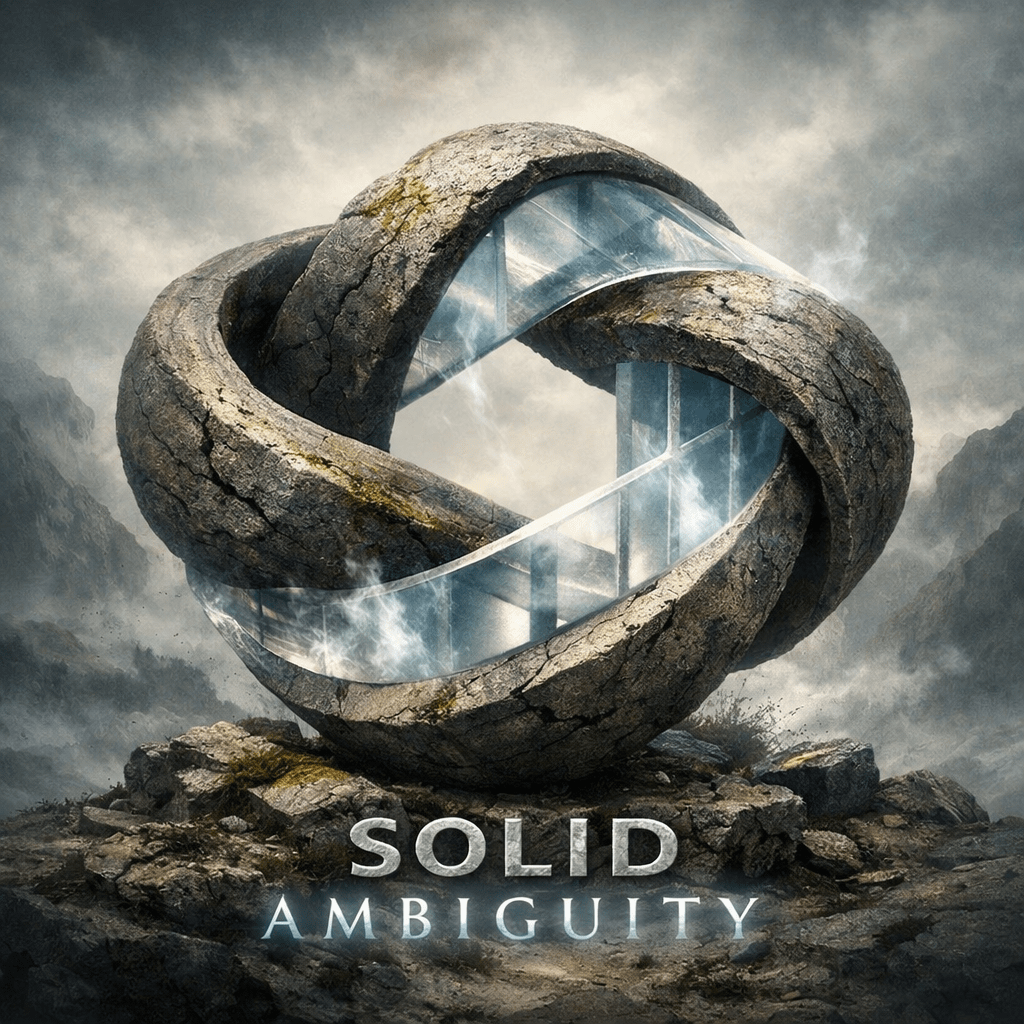
Graphic by CoPilot AI

I may be remembering the timing incorrectly, but it seems like early in my corporate career (started at the end of 1997…) a LOT of companies were publishing job descriptions, especially when posting jobs internally or on the fairly new Internet, with one of the desired traits/skills being “to be comfortable with ambiguity”. I feel that being COMFORTABLE with ambiguity is different from being able to HANDLE ambiguity. The latter is probably the best that most of us can muster. I’ve have never, in my life, met someone who is “comfortable” with ambiguity. Every one of us seeks stability and certainty of some degree in a good chunk of our lives. Ambiguity is the speed bump you didn’t see, the change in weather on the day you were counting on it being nice, the change in plans for a day, etc. Look around you, every moment. Ambiguity abounds. (A good friend of mine wrote a blog post about this kind of expectation/schedule yanking at https://steveawiggins.com/2026/05/07/snowballs-in-spring/)

So there’s this tension we need to be aware of and learn to accept instead of ignore or react violently to. Holding each moment as distinct and not everlasting, realizing the next one is already upon us and is different than the last one. That the chances that the next moment will be as we expect, according to habit, pattern, or what we think we know, are variable.

I’ve been reading a lot of books by Brian Greene and others about quantum sciences, cosmology, and a lot of other truly fascinating (at least it is to me….) stuff. In between that and a lot of reading concerning Christian mysticism, other belief systems including Buddhism and Native Nations’ spiritual experiences and cultures leads me to believe that the reality of the mutability of each moment and awareness of that is something that relieves this tension. Acceptance and awareness, coupled with a growing realization of how this all fits together in Ecology and Cosmology.

So, I came up with a concept that allows me to hold this kind of somewhat paradoxical sense to myself. I call it SOLID AMBIGUITY. Why “solid”? Good question. That word communicates to me the picture of something that I can rely on, a very real trait of ambiguity. Right now I’m sitting in my Office/Man Cave at home. I am fortunate enough to have 4 windows here on the second floor that look directly into the trees nearby our home. The sun is out (not a REALLY consistent occurrence here in the Pacific Northwest in Spring, so enjoy it!) and the trees are full of life. I’m listening to music (of course I am…)…right now; the group Snarky Puppy, and music by Steve Reich is cued up shortly. My body is not too achy (a nice state of things that I do NOT take for granted anymore…).

Each and every one of these items (along with the untold number of others that pass by and change every moment) changes…solid ambiguity. I can count on it. Most are pretty ignorable (teeny tiny things or “expected” items that flow past). When a big change takes place like, say, a completely unforeseen gust of wind blows through and causes one of the trees I’m looking at to keel over, I can be startled. Being in the moment allows me to take that in, be mindful of my being Right Now, confront what my response should be, and over it all allow the center of my being take the stance of “Well, THAT happened…”. I need not concern myself with the event of that past moment. I can focus on the moment I’m in so I can pay attention to the time and space surrounding me now.

Everything that I’m describing is woefully inadequate to the experience. Paying attention to as much of everything in and around me is impossible to describe. There’s too much. However, the experience and discipline is there. The moment opens itself. I believe it was Thomas Merton who wrote that each moment is pregnant with the next. Pregnancy implies new life, and new life is exciting and certainly worth being grateful for.

Being: Salt

“You are the salt of the earth; but if salt has lost its taste, how can its saltiness be restored? It is no longer good for anything, but is thrown out and trampled under foot.” – Matthew 5: 13 (NRSV)

For quite some time now I have been fascinated with incorporating “being” in my life and awareness. This hasn’t been easy, nor is it ever “done.” (I know I’m using quotation marks a lot here, but bear with me…)

A term and concept that has gained a lot of attention is mindfulness. This is an aspect of being that I include in my dialogues, but my growing understanding and experience of being (I’m dropping the quotation marks for that word at this point…) is only part of it.

Mindfulness, to me, is being fully aware of the moment in which I reside, at any given moment. It implies a certain kind of attention that is neither cast backward nor forward. One way of looking at how I apprehend being at this time is kind of mindfulness without the attention. Let me explain further….

Continue reading

Listening: Attention or Intention?

Attention Listening

Listening

“PAY ATTENTION!!!!!”

In your life, how many times have you heard that phrase, either from someone else or your internal voice? Shutting out distractions like noise, devices or the torrent of thoughts and imagination that the Buddhist tradition has termed the “monkey mind” seems nearly impossible. We slap ourselves internally in some fashion, and try to refocus on the speaker. This can be just as jarring as the distractions themselves!

Mindful Listening is really not about attention. It’s about intention. Let me explain how I understand and experience the difference.

Continue reading

Mindfulness and Taking Stock

Mindfulness

Mindfulness

This past week was a good and difficult one.
One of the hard bits was working to get five + days of work done in three, as I had scheduled Thursday and Friday off to celebrate my anniversary and birthday. I work to do this every year and have been pretty successful to date, although banishing work from my mind is always a challenge as an entrepreneur. Still, it was good to get away from the screens and focus on each day and the moments each held, along with the commemoration activities.
I focus on this set of events for a couple of reasons.
First, I wish to celebrate life and relationships, and this is another way to mark them as memorable and life-giving.
Second, this particular birthday gives me pause. I am now the age my father was when he was consumed by cancer and died. That, along with the near approaching anniversary of the death of my younger brother in two weeks, I am particularly aware of being present in each moment and how this manifests itself in my “normal activities”…..”normal activities” being the usual, rather mundane things of every day.
You may be thinking (if you’ve read this far..), “Why is he writing about this on a business blog?” A fair question…

Continue reading

FOCUS: How Do You Compare Awareness vs. A Noisy Internet?

[fusion_builder_container hundred_percent=”yes” overflow=”visible”][fusion_builder_row][fusion_builder_column type=”1_1″ background_position=”left top” background_color=”” border_size=”” border_color=”” border_style=”solid” spacing=”yes” background_image=”” background_repeat=”no-repeat” padding=”” margin_top=”0px” margin_bottom=”0px” class=”” id=”” animation_type=”” animation_speed=”0.3″ animation_direction=”left” hide_on_mobile=”no” center_content=”no” min_height=”none”]

Awareness

Awareness

Moving from Awareness (I sometimes call it Discoverability…) to Reputation, and then to some kind of Economic Engagement (Sales, Donations, etc…) is a well-known path for many businesses.

The first stop on this journey is gaining Awareness of your business. Sadly, there are still a number of businesses who feel and act as though the best way to get attention is to YELL A LOT ONLINE! This number is shrinking, but they are still there. What the rest scatter into are versions of:
  • Semi-random posts based partly on the business and partly on when whomever is managing the online activity has time or interest to post something. Hence pages that will have four posts in one day, and then go 3 months before the next one.
  • A steady stream of “We’re Great! Everyone Says So!” and “Buy Our Stuff!“. These folks generally post a lot, and descend into “Internet Noise” pretty quickly…
  • The “Cats Rule the Internet” strategy, where a large number of posts are entertaining GIFs and Videos of Pets, People and Fun things, but without any balancing of content that’s valuable to the customer, except for those who find filling their day with looking at this kind of stuff valuable. May drive a l lot of traffic, but no business.
  • Patterns that ALMOST come together into a coherent plan, but lack the real strategy to make progress in their marketing and business goals. Sometimes the owner is a regular use of some channel like Facebook, and so knows kind of what others do, but hasn’t worked through how that looks for her business.
  • Some solid execution plans that are moving the needle for the business and producing value. These companies are intelligently investing in and leveraging digital/social media to MAKE MONEY.

Continue reading

How Important is Unsurpassed Genuine Tenacious Persistence?

[fusion_builder_container hundred_percent=”yes” overflow=”visible”][fusion_builder_row][fusion_builder_column type=”1_1″ background_position=”left top” background_color=”” border_size=”” border_color=”” border_style=”solid” spacing=”yes” background_image=”” background_repeat=”no-repeat” padding=”” margin_top=”0px” margin_bottom=”0px” class=”” id=”” animation_type=”” animation_speed=”0.3″ animation_direction=”left” hide_on_mobile=”no” center_content=”no” min_height=”none”]

Tenacious Persistence

Tenacious Persistence!

I am reminded of the role of tenacity this week.

Many kinds of dogged persistence crossed my path. In my business, I worked with several clients working through tough business problems. Despite the distraction of the holiday season, each is determined to make headway on each particular challenge. There have been some “stall points” along the way, thanks to old processes colliding with newer, better informed efforts. Nonetheless, each is steadfast in their desire to get the older processes and mindsets either altered to the newer ones, or discard them. This is not easy (particularly when older process are personified and actuated by existing team members who have “always done it that way, and it works kinda OK…”), but the little successes along the way are proving the value of the work, and provide the fuel for the tenacious spirit they display.