“Patriotic”?

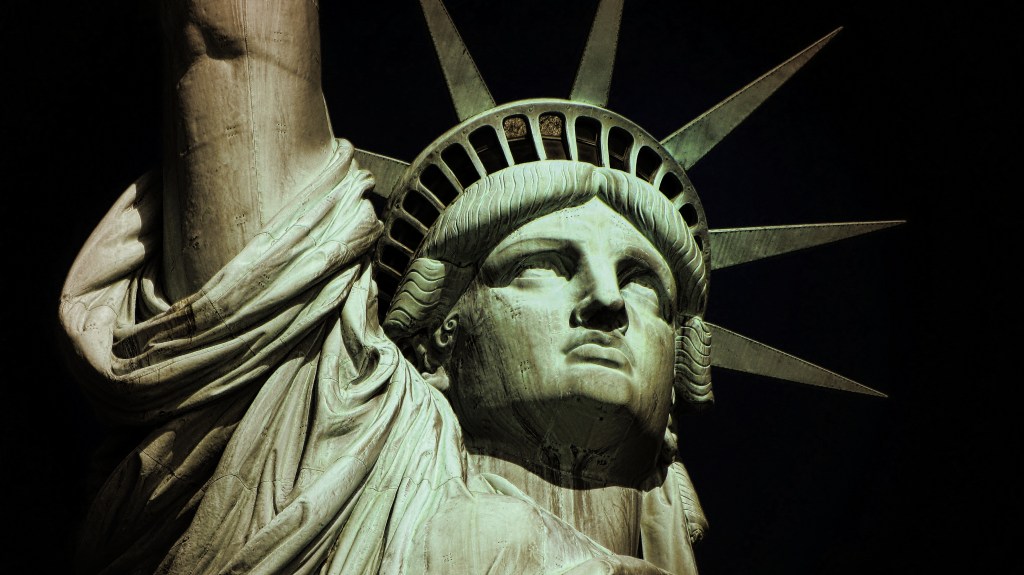
Cubic light years of real and virtual ink has been, is, and will continue to be “spilled” about patriotism. Since the United States is celebrating it’s 250th birthday, that makes sense. I was deeply embedded in celebrations of the nation’s 200th birthday in 1976, and there wasn’t a big enough rock on the planet to hide under to avoid being aware of that….

I’ve written at length in various other spots on this blog and elsewhere about the squirmy and fluid attributes of language, and certain words – which in some contexts I’ve designated “weasel words” – are particularly susceptible to this attribute. Patriotism is one of the biggies.

Some background: I am a retired U.S. Navy veteran. Embedded in those military years is a period of time when I was in college and not in the Navy – when I served in the National Guard. I was in some sort of military from 1973 through 1996. I wouldn’t trade that experience for anything, and it played a big part in how I think of patriotism. I was nowhere near any kind of “front lines”. I was a Musician in the Navy and a Personnel Administrator in the National Guard, so firmly in the support and back office roles. Still, as was demonstrated in the Bible by how David treated the people in his community in the field before he was crowned king, the folks who didn’t go out to battle the foe but instead stayed behind and maintained the home base were as valuable as the warriors. There were no second-class occupations in his group. I got to play concerts for a lot of people in those years, many military and many public, that played a positive role in a number of different activities and events. I am pleased to have served.

So, what DOES patriotism mean to me? Good and interesting question. Once again, a problem is language. I have to use language to describe language, which is self-referential, and may not be really helpful. However, sometimes thinking of the word as a many-faceted jewel and using other language constructs to describe different angles of the gem can give a slightly more clear view of what I feel when I think of patriotism.

There’s another issue with language, by the way. In the particular case of the word “patriotism“, much of what composes my definition are feelings, perceptions, and wickedly-difficult-to-describe apprehensions. Arising from emotions, they become even more difficult to articulate. So, if this only gets muddled instead of clarified, I hope you grant me a little slack!

My baseline feeling about being a patriot is one of humility, and a mix of comfort and discomfort about my country’s aspirations and history.

The thing about aspirations is just that: they are aspirations – they are where you want to go. Principles towards which we orient who we want to be. I don’t feel that any of the Founders could have looked around when they wrote the founding documents and debated them in the late 18th century and said with any kind of credulity that what they were putting to parchment was “the way things are“. Good grief, NO!

The thing about history is that it happened. It is impossible to record all of any moment. History, therefore, is a slimmed down recording of something that happened. This something happened in the context of a particular moment with any number of different people and forces, none of which we are truly privy to. This recording is subject to a huge number of interpretations. I won’t go into all of the factors that influence that. Needless to say, since humans are involved, universal agreement on the interpretation of a moment in history is impossible.

So, aspirations and history…

For example, when they wrote that all men are created equal, while true as a statement of Being, it was a long way off of the implementation or actualization as a central tenet. It still is. What does that statement imply for government, law, culture, and business policy, let alone how we treat each other? We’re still working through it, sometimes more on the “discussing and convincing” side, sometimes more on the “banging each other on the head” side. The former is more civilized, but we Americans can be just as beastly as anyone else, especially to those close to and around us. Sadly, we don’t seem to have progressed as far on that front as many of us would have liked, but we keep trying. Americans can be a remarkably stubborn lot.

We get some things right. We get some things wrong. We always have and always will.

Be humble about our general fallibility and grateful for the bits that worked out for everyone. Patriotism can be the recognition of our Greater Community and not the creation of “Us vs. Them“. Remember the opening salvo from the Founders – “We the People

We are we.

The Line

I pretty much get the moves that the ELCA (Evangelical Lutheran Church of America) makes to recognize the marginalized and the discriminated-against in our community and culture. Author and Shaman Lenny Duncan made that really clear in his Dear Church book, and certainly in his posted experiences in the past several years.


So when it was announced from the pulpit this past Sunday that our church was going to eliminate and/or limit the use of the words “Lord” and “Master” from service as they are reportedly offensive to (especially) Black members of our community, it jumped out at me. They (the words) hearken back to the deferential words and attitudes that slaves had to display to their owners. I can really see the tie-in.


But this bugged me for some reason. The study I have done on language and the history of certain words used a lot in the Bible presents me with a bit of a dilemma. As I understand the etymology of the word Lord, the Hebrew Bible uses this word in place of the Name of God, as it was not allowed to pronounce it (or even to write it, depending on how strict you wanted to be in the interpretation). A number of Christian writers, thinkers, theologians and teachers have chosen to use Lord instead of the Name of God in respect for the Hebrew traditions and their Jewish colleagues beliefs.

This is where the cultural context of language gets sticky. In the process of abstracting or obfuscating the word Lord from community liturgical use, what might this signal to our Jewish community, especially given the rise in anti-Semitic language and attitudes throughout the West of late? There is also another cultural challenge: Lord is a key word, and more importantly concept, for many Christians in their own spiritual lives. While the abstraction and excising of the Lord from the liturgy may address the discomfort of a segment of the community and acknowledge a past that is despicable, it denies the depth of integration of a particular, somewhat different meaning of the word into the devotional lives of others.


Where is the line? At what point is love, understanding and compassion flowing both directions? And there are So Many discriminated groups within our culture…..in a discussion I had about these questions, it was pointed out to me that, among many others, women are a discriminated class. Despite much having been done over the past number of years in opening up ministry, authority, and inclusive language, is it “enough”? What does “enough” even mean? Positive steps have and are being taken, but is our culture putting those efforts on pause, slowing them down, backing up, or what?

Other groups of community members with “invisible disabilities”, such as neuro-divergent people or those suffering from chronic pain, present different and difficult challenges to the caring people around them. How are the church and community seeing, prioritizing or addressing them in the context of the liturgy, their spiritual lives and day-to-day well-being?


Where is the line? That’s a really good question. Should there be a line? Ideally, no. Inclusiveness, by definition, means including everyone. Partitioning people into different groups, while helpful in ministering to needs, contains the danger of walling people from each other, and unconsciously prioritizing one group over against another. This is not the way that Jesus ministered, that I can read. He said that he came first to the flock of Israel, and then would turn around and heal and/or minister to Gentiles. For example, the demoniac of Gerasene was quite obviously in the Gentile world (why else would there be keepers of an enormous herd of pigs right there?!). Yet He cast the Legion of demons from this guy and sent him to witness to what God had done for him. No apparent line in His ministry that I can see there.


What can this mean for our actions within today’s world? I don’t think I can give any kind of definitive answer, other than to draw attention to The Line and encourage us to consider its meaning both in a liturgical and day-to-day apprehension.


The Line is there. Do we do anything with it?

Embracing and Being Transformed by the Storm

Storm chaser

Embracing the Storm

As I sat at my PC this morning attending virtual church, some of the dialogue focused on the fact that this is “Graduation Weekend” for most of the schools in our area. The pastor spoke of the different kinds of ceremonies taking place, given our isolated and socially distanced frameworks today. One thing he mentioned that stuck with me was that the student speakers used the themes of “Embracing the Storm” and “Transformed by the Storm” as their context for these significant times. These struck me in ways I didn’t really expect.
First, a bit of context (those of you who know me well know that I’m big on context and am a storyteller….). I was born and raised in Iowa, and grew up with the regular late spring and summer dangers of tornadoes. Since then I’ve lived in places where I’ve gone through super-typhoons, volcanoes and earthquakes. Still, there’s nothing like a tornado to make you feel like Mother Nature has drawn a bull’s eye on you (if you’ve ever seen the movie “Twister” you can get an idea of how personalized it can feel…). I’ve seen the inside of some pretty nasty storms, seen the destruction and felt the fear.
The big difference between any of those kinds of storms and what we are living through together now, in my observation, is that they had pretty distinct beginnings and endings (and then the clean-up could begin…). Nowadays, not so much. While we think we have an idea of where and when (and even a bit of how…) the whole COVID-19 pandemic began, we literally have no idea when, or even if, it will end (is ti going to be something that we just get a shot for every year like the flu, for instance? I don’t know…).
And, as if that didn’t throw the world into enough of a whirl, we have all the political and socio-cultural upheavals that have been boiling along for 40-60 years (and actually longer……) and have come to a head in the past 4 or 5. To lift out an obvious example, as a global concern, and especially here in America, the baked-in, systemic racism for which the death of George Floyd has served as a tipping point of awareness and anger for a significant portion of our world. These, and other, storms take our preconceptions and societal blind-spots and either blow them completely away or, at least, grind away at them to show us glimpses of Reality. Generally, it’s not pretty…
I return to my analogous experiences of embracing the storm:
  • I didn’t want to be there when the storm took place, but there I was.
  • The view of the storm I had was Real, and not removed by a TV screen or a news report. I was IN IT…..and I was scared.
  • My first prayer was one of survival for myself, and then for the others who were going through it with me. Regardless of whether you had a shelter (such as it might be…) or not, the storm did not care.
  • My next thought was one of fearful/hopeful wondering when it would be over and what things would be like afterwards.
  • During the long periods of clean-up and restoration, the community became more visible and provided hope, strength and the kind of caring that did the heavy-lifting of healing and repair, at all levels (that is, from literally picking stuff up to taking the data and event info and figuring out how to better protect life and limb in the future…).
That last point is the “Transformed by the Storm” bit.
Disasters have a way of breaking the points in a structure that are weak to begin with, as well as helping us to discover the unsung and previously unsuspected strengths of our communities. Transformation takes place when we as individuals, communities and societies honestly take those learned and painful bits and actually work to change and improve.
No recriminations (excepting criminality, which needs to be addressed and dealt with in a just fashion [“Let he who is without sin cast the first stone.”]). If institutions need to be created, destroyed or adjusted, do it. If ways of doing business work really well, keep and enhance them; if not, chuck them. If people and roles are “essential”, they need to treated as such all the time, not just when things go south and we need them.
We do not have the luxury of choosing when the next catastrophe will take place, or its nature.
The sooner we face the facts of our individual and collective complicity in our own inadequate and frankly disastrous existing paths of response (or lack thereof…), the better chance we have of still being on this lovely world of ours in a hundred years.