Do Your Audiences Have Faces? Can You See Them?

Does it have something to do with the lighting?

Whenever I get to speak or perform in front of an audience, there’s this gentle tug-of-war between two opposites:

  1. Focusing in on a face, moving to another face and so on. I really want to see if I am connecting with each person. However, unless I have what I’m doing TOTALLY ingrained in my mind, I can “lose the groove”, so to speak, and end up either stumbling, heading “down a rabbit hole” in my story, or “vapor-locking” altogether (that is, stop with a total blank in my memory and delivery, and stand there like a tree…). None of those alternatives is very attractive.
  2. Kind of “defocussing” the individuals and scanning the group without any real attention paid to any one person. While this can aid in concentration and focus, it can advance the impression that I’m just “putting on a show” and am not interested in the group.  Believe me….they can tell.

Continue reading

Why is Your Audience So Scary?

English: Audience in the main hall of the Mobi...

English: Audience in the main hall of the MobileHCI 2008 conference. (Photo credit: Wikipedia)

How uncomfortable are you with your audience?

I have spent a large portion of my life in front of audiences as a musician, as an educator, as a speaker, and, going way back, as an actor (think “the class play in junior high school“…), so I have worked with and observed audiences in a lot of different ways and scenarios. If you read my blog regularly you might think that my concept of an audience versus some other social construct is a little lower than, say, a community.

Not really…

Continue reading

Are You Really Thrilled With That Visit?

NPS Ranger greets visitors at the visitor cent...

NPS Ranger greets visitors at the visitor center front desk. (Photo credit: Wikipedia)

What do you think about when you hear the word “visitors?”

Context can provide you with different pictures…
If you are sitting in a meeting at work and your boss introduces a couple of people at the front with her as “visitors from headquarters,” your thoughts may turn to why someone from corporate came to visit your office in the hinterlands. They might be new managers acquainting themselves with the company, consultants that will be working with you, or the dreaded HR reps….

Continue reading

5 Superior Social Media Posts to Drive Your Business!

You want “The Short List.”

This list gives you the best information for your business, and let’s you understand what will make your digital and social media marketing work so you can get back to work. I have collected these 5 articles from around the web as the best of the best for October. Read them all, then figure out how you can execute on them, based on your goals and resources.

Ultimate Blog Post list

Ultimate Blog Post list

You’ve got a blog or intend to start one, but are REALLY intimidated by the idea of having to come up with posts every week (or however frequently you have decided to publish…). I scan this list regularly to jog my creative juices and come up with new ideas. This article is by Russ Henneberry of DigitalMarketer.com.

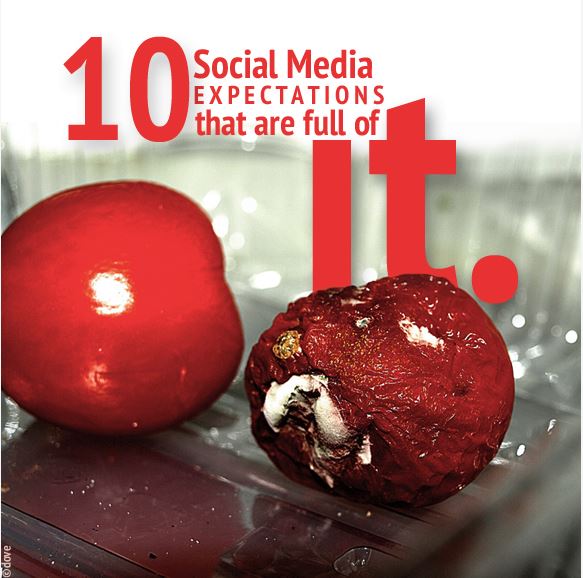
Social Media Expectations

Social Media Expectations

There are still a lot of entrepreneurs and small businesses that are guilty of “magical thinking” when it comes to what social media can accomplish for their businesses.
When you go searching around the web for ideas to improve your digital and social media marketing, you’re confronted with the same thing I am: a TON of information! You don’t have the time, the patience, or maybe even the depth of expertise or comfort in a lot of these areas to know who’s reliable or who’s just selling something. This article by Carol Stephen helps you stay grounded.

ROI cost-effectiveness

ROI cost-effectiveness

The acronym ROI (Return On Investment) is so easily bandied about that most of the time you think you know what it means, and you’re wrong. I learned so much by reading the works of K.D. Paine that I want you to become acquainted with her and her work. Most of the time, what you really want to know is the CEA (Cost-Effectiveness Analysis), which “compares the relative costs and outcomes (effects) of two or more courses of action.” This article will help you get the difference so you can figure it into your calculations for resources and costs.

Social Media and Competitors

Social Media and Competitors

If there really is “nothing new under the sun,” then it makes particular sense to check out what your competitors are doing (successfully and unsuccessfully…) on social media. This article by Matt Walker, CEO of Main Path Marketing, outlines some great tips and a good starting methodology to figure out how other companies’ social media strategies, altered to fit your business, can help you. Competitor research is something that a lot of small and medium businesses miss, and it can be a real gold mine.

Networks and Communities

Networks and Communities

Networks connect; communities care.” In this Harvard Business Review article, Henry Mintzberg, a professor of management studies at McGill University in Montreal, touches upon the roles of each kind of construct. In my business I work with clients to understand the opportunity and value of each kind of construct (network, audience, and community) and ensure that businesses approach them in ways that drive the greatest value. If you want to get a handle on the differences and challenges, this is a great place to start.

Get this kind of information more regularly and sign up for my Social Sapiens newsletter.

Want more? Like and Share the Social Sapiens Facebook page, sign up for Notifications under the Like button, and add us to your “See First in Your Newsfeed” group.

Will You Compare the Truth About Audience vs. Community?

My Audience

My Audience

My Community

My Community

How you interact with your customers and prospects can show you (and them…) how you think of them. Without resorting to standard definitions, I visualize the difference this way:

AUDIENCE: I am in front of a group of people who are facing me. I’m speaking and they’re listening (or at least I HOPE they are….). I look into their faces and watch their body language, but it is difficult to get a real assessment of whether I’m connecting with them or not. Having been in audiences before I know how easy it is to “look engaged”. I also notice how many are working their smart phones, tablets and laptops….I hope they’re taking notes, but probably not. At the end of the talk, there are a few questions that I answer, but many more of the audience arise and leave. There is a little bit of chatter between a few of them as they head out the door, but I have no idea what it could be about. Unless I’ve given them some sort of meaningful survey or method of valid feedback to learn what their experience was, I really don’t know.

COMMUNITY: I am moving amongst several groups of people that are part of a larger group of people meeting here. There are discussions going on in each of them, some about the bigger group, some about the smaller groups, some about processes and business, and some about their lives outside of the groups. People move easily between the smaller groups as they become interested in them. I get to move through each of the groups, listen and take part in the discussions. There is a much stronger sense of “belonging” and being invested in what’s going on. Fewer people have their phones out, except to check their calendars in order to set up personal meetings with other members of the community outside of this larger meeting. Some members stay in one small group the whole time, but they seem very engrossed in the conversation while not taking it over. Each member of the community can build a more authentic relationship with another (according to what they are comfortable with…), resulting in trust and, when the time comes, that crucial recommendation, referral, or sale. While the relevance of the overall community experience may be still somewhat hidden from me, I can learn a lot by listening, observing and asking appropriate questions.

Community is harder…is it worth it?
How do you communicate and reach out to your customers and visitors?

What’s the difference to your business?

Do you care enough about your business to figure out how this might work for you and your customers?

Good questions.

What are your answers?

How Can All The Personalization Opportunities Possibly Scale!?


Embed from Getty Images

I recently attended a half day of training focused on the roles and nuances within the business networking group I belong to. While extremely enlightening and really useful as I work to get a grip on my new role as president in my chapter, I’m struck afresh by the spectrum of differences that we each have as humans.  In the case of the discussions I had, they focused on personality types and learning styles as they pertain to the other members of the group. Extend those classifications to digital marketing, especially as an entrepreneur, and you can begin to feel overwhelmed. It’s one thing to write, say, a message for an email campaign in four different ways to accommodate four personality types, but take the personalization further to learning styles, cultural and generational differences, best channel for communication, etc. and you just might feel that going back to a broadcast “one-size-fits-all” style is just easier, and it used to work OK, so just go for it.  Or maybe walking around wearing a sandwich board!

Not a great idea, although the sandwich board might be pretty good exercise…

Continue reading

What is Social Proof and Why Should I Care?

You’re always looking for quality shortcuts. Anyway and anything that can help you make a good decision (I don’t Need help making bad decisions…). The Internet has taught us all very well:

  • 80% of consumers search for a product or service online before purchasing it.
  • 70% read online reviews before making purchase decisions.
  • 68% of consumers begin their decision-making while searching for a keyword.
I know that I always begin my search for a purchase or more information about something that may result in a purchase (even something like the weather differences between the Oregon coast and the California coast….could result in a short vacation decision sometime…) by reading reviews and recommendations of many kinds. It’s a way of figuring out who to trust.  Unfortunately, we’ve all heard tales of the system being gamed: bogus reviews on Amazon, Expedia, or Yelp, Facebook, Twitter and Pinterest followers purchased, questionable endorsements on LinkedIn, and numerous “thumbs-up”s or “+1″s purchased or comped in some way.

What’s real and what isn’t?

Continue reading

What is the ROI of an Awesome Quality Relationship?

Like you, I have a hard time balancing “all the stuff I need to do” as an entrepreneur with things like spending time with my family, detaching from the Internet and screens, and nurturing a creative hobby that doesn’t entail playing Civilization for an afternoon. One of my halfway measures is I take a little time on the weekend to catch up on my reading: I’m three weeks behind on my stack of The Economist, I want to make headway on at least a couple of the books I have going on my Kindle that DON’T have to do with social media, business, or consulting, and catch-up on the handful of truly magnetic posts from my favorite bloggers.

Continue reading

Do You Know The Truth About Connection and Appearance?

Connect Four

Connect Four (Photo credit: Wikipedia)

I belong to a few business and networking groups, as well as a service organization. Only at one of them do I have the luxury of spending time with the members (about 25) on a weekly basis and the ongoing encouragement to get together with a couple of them every week to really get to know them, their businesses and their lives. I am able to connect and as a result I feel almost as invested in their work as they are (I’m still working on birthdays and favorite foods, but, hey, we’ll get there!). I am fans of them and their work and actively seek out ways to promote and assist each one, if I can.

How can the Silent Majority Unlock your Bottom Line?

Silent Majority

The Silent Majority


Do you remember “The Silent Majority”? While the phrase has been around for a very long time, it was popularized by Richard Nixon in 1969 in a speech, and also referred to by journalist Theodore White as the “mute masses.” In a different context, this phrase also represents the voices you hear (or don’t…) on social media. Research shows that almost 90% of what you hear there comes from less than 30% of the most vocal users….and they are different from the the quieter folks that make up the bulk of your online audience.

Continue reading