In my recent post “Which part(s) do you see?” I wrote about the existence of the many, many facets of pretty much everything: people, events, clothing, times, works of art and science, and so on. The more facets you see and understand to be integral to what you’re seeing, the harder it becomes to truly describe it.
A received a comment on that post about how much of challenge it is to REALLY know someone, whether a spouse, a parent, a child, a BFF, and others. People have so many facets that, in paying attention and time in evolving the relationship, real description becomes almost insurmountable. There’s that….
I started thinking, however, about the more or less opposite challenge. I have several friends, and one in particular, who are writers, mostly of novels. I also have a couple of friends who are journalists. Each of these callings create a problem for the writer (going forward, I’ll gather my journalist pals in with the term of writer….). I’ll get to the issue shortly.
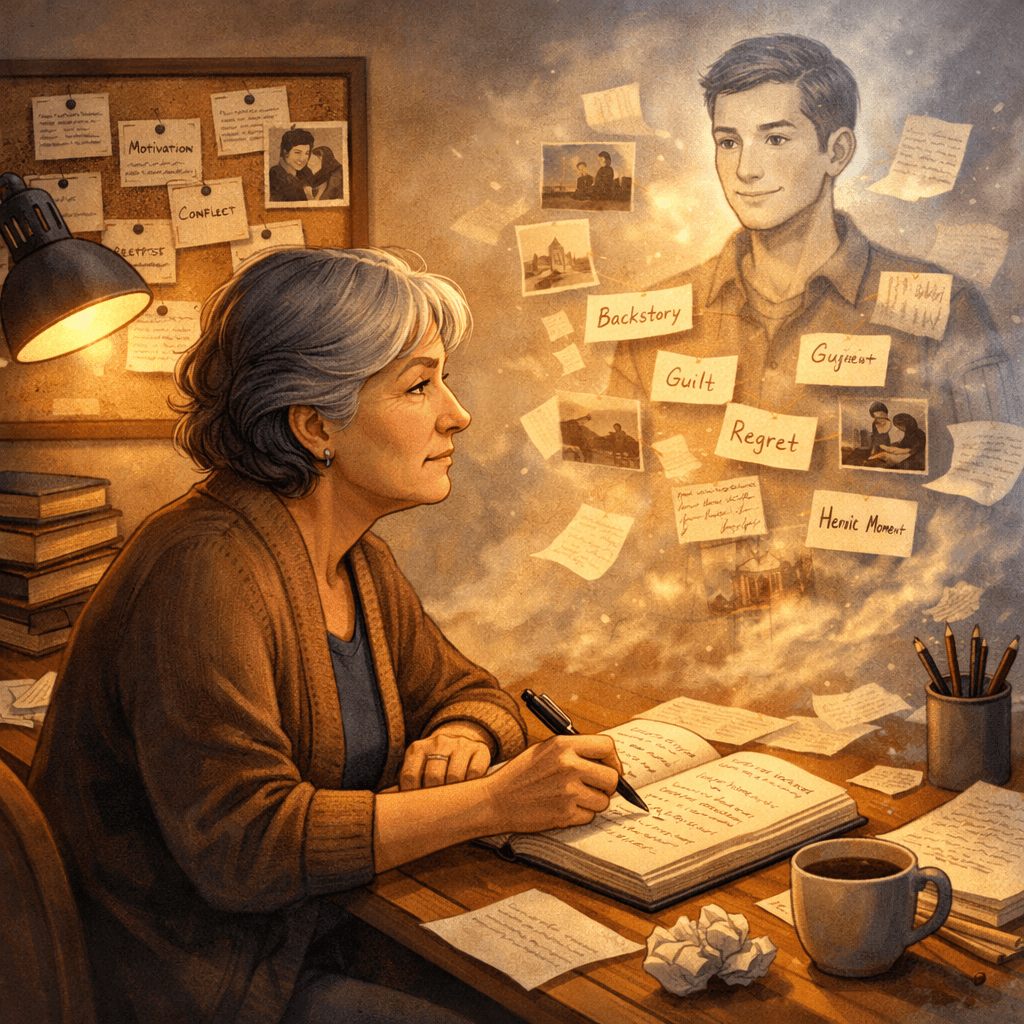
First, I want to state that I now understand why so many of the Author forums and pages I have visited over the past several years have discussions surrounding constructing characters in their work. I have certainly read works where the story wasn’t too bad, but the characters were shockingly one-dimensional. Introducing a character is one thing, but fleshing one out to interesting and believable is another entirely.
So the issue is, if a person is a gem who is showing (or not showing) all of their facets, how does an author create a “complete” character without trying to expose so many of the character’s facets that they become virtually indescribable in their writing? I realize that this is both an Art and a Science, and doing it consistently well is a true gift. I take my hat off to all of you writers who work so very hard to do this.
This recognition extends to journalists, too, for a slightly different reason. Journalists are expected to deliver a story (if it’s news…opinion pieces are a bit different) as neutrally as they can. This is completely impossible, but each of them does the best she/he/they can. Why is it so hard? In describing an event, the journalist is directing attention to a facet or two of the event. Trying to illuminate the entire gem is impossible. Plus, in directing attention to the one or two facets immediately creates the message in human minds that those facets are more important than others in the event, which may or may not be true, but, again, there’s only so much a journalist can do. Describing an event as neutrally as possible by including as many facets as are communicable while not obscuring the event is wicked hard.
Directing attention in this way, sadly, is also how stories can mislead and misinform the readers. Those who have agendas, ideologies, axes to grind, things to hide, etc. can look at the gem and choose to highlight different facets that can be woven into a narrative supporting whatever the writer is trying to overtly or covertly support (for example, think of some who write about the world and cherry-pick verses from the Christian bible to support what they want to call out….The Bible is WAAAAAAAY more complex than that….). Being aware of the power of description, the difficulty of expressing near-neutrality and, in other writing, creating those characters in such a way that they are real-ish…these are all skills and abilities that responsible readers can and should cultivate. We need to be aware that we’re only being shown what can be shown in some way that’s comprehensible. Upon consideration, we get to decide if the character drawn is reasonable, or the news story is mostly neutral or skewed. It’s up to us and our big ol’ brains to work through this.