OK, so yesterday I finished the Think Indigenous audio book by Doug Good Feather. There was a lot of stuff there that I had heard some version of before, mostly from Stephen Charleston – he’s a member of the Choctaw Nation and Good Feather a member of the Lakota Nation. I ponder the similarities between Christian mysticism, Buddhism, Sufi and the recorded beliefs of many Indigenous People. I have the Book of the Hopi by Frank Waters that I want to read soon before my eyes get any worse!
In a graphic from the audio book’s companion PDF a couple of versions of the medicine wheel are presented. The first layer out from center has four – I forget the collection’s name – core beliefs/virtues. They are Joy, Love, Harmony, and Wisdom.
The word harmony struck me in this context. I’m sure others have waxed eloquent on harmony in relationships, with oneself, and with the universe around us. The sparkling light for me in that analogy is a consideration of the music composer.
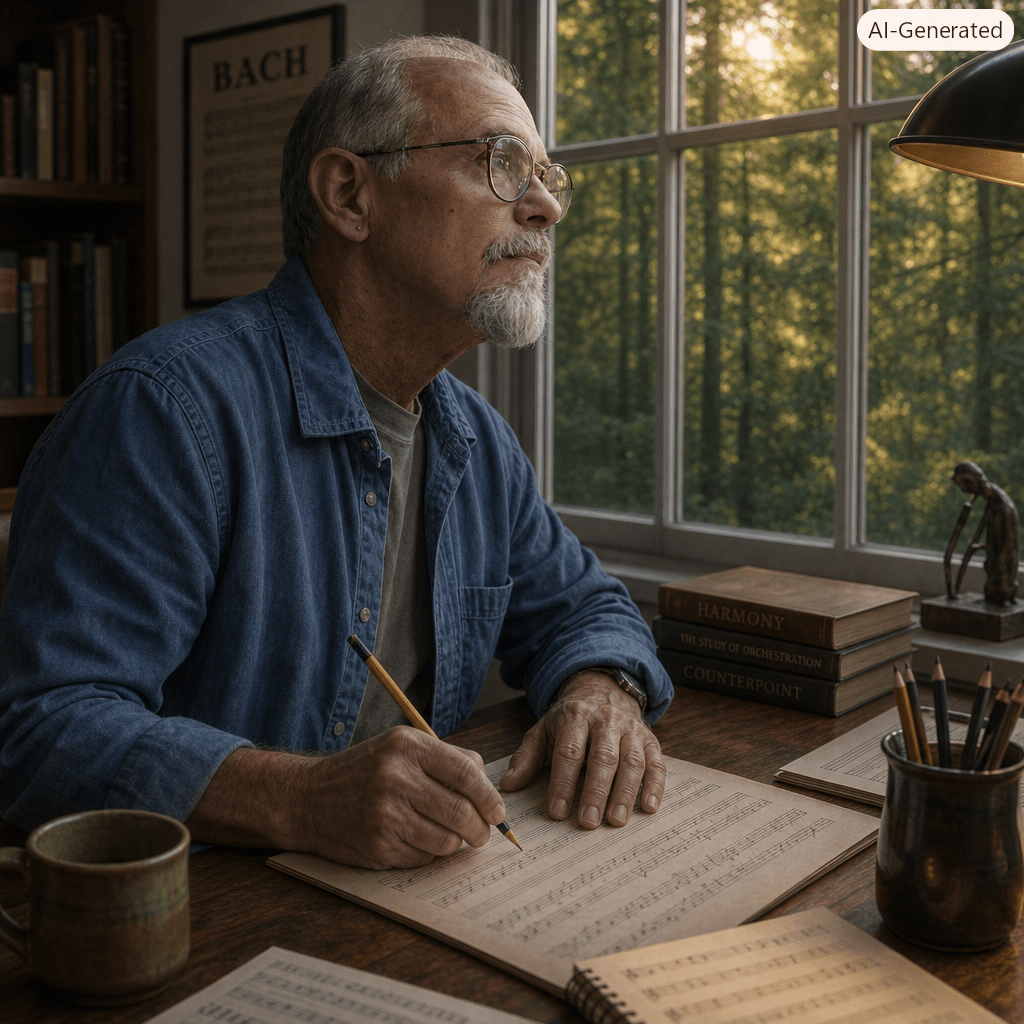
Having written some music back in the day, I relate: large ensemble work, “experimental/electronic” stuff, solo instruments, chamber groups, a couple of vocal pieces, and plenty of tunes for different sizes of jazz and pop ensembles. The situation, creative context, and the music in my head all worked together – although it sometimes felt like “conspired” – to create the harmonies I needed. No single boiler-plate harmony would fit each of these.
The context was multi-dimensional. The lines of the notes, their interplay – or lack thereof – , how naked – or dense, or any version of consonant or dissonant – the harmony would be, the effect within the ensemble and that played out, where the line/ensemble had been/was now/will be. Those points just scratch the surface. It was a terrific experience that I hold dear.
So, in taking this viewpoint about harmony and how that virtue shows up in me and in the world from moment to moment is where my heart and head are now. The thing about harmony is the need to have “good ears.” Good composers and arrangers have these, as do musicians who improvise. Listening is key. Carry the line that brings you to the present moment and listen even harder for where the line might go. Then take part in the movement. It may seem obvious, or you might coax the line to head someplace else, near-by or on another planet. Follow that. Even if you screw up, you learn, and maybe you’ll head into a new place that’s REALLY intriguing! It will be awesome!

